Raleigh Basement Waterproofing: Where the Water Gets In
Basements are uncommon in North Carolina, so the ones Raleigh does have tend to get little attention until something gets wet. Basement waterproofing works best when it starts with where the water comes from, not with a product.
Fixr's 2026 guide puts a typical basement waterproofing project at $3,000–$10,000, with $5,000 a common total. Interior drains run $40–$120 a linear foot, crack injection $250–$1,000 per crack, a sump pump $600–$2,500 and regrading the soil outside $500–$3,000. Outside fixes usually come first.
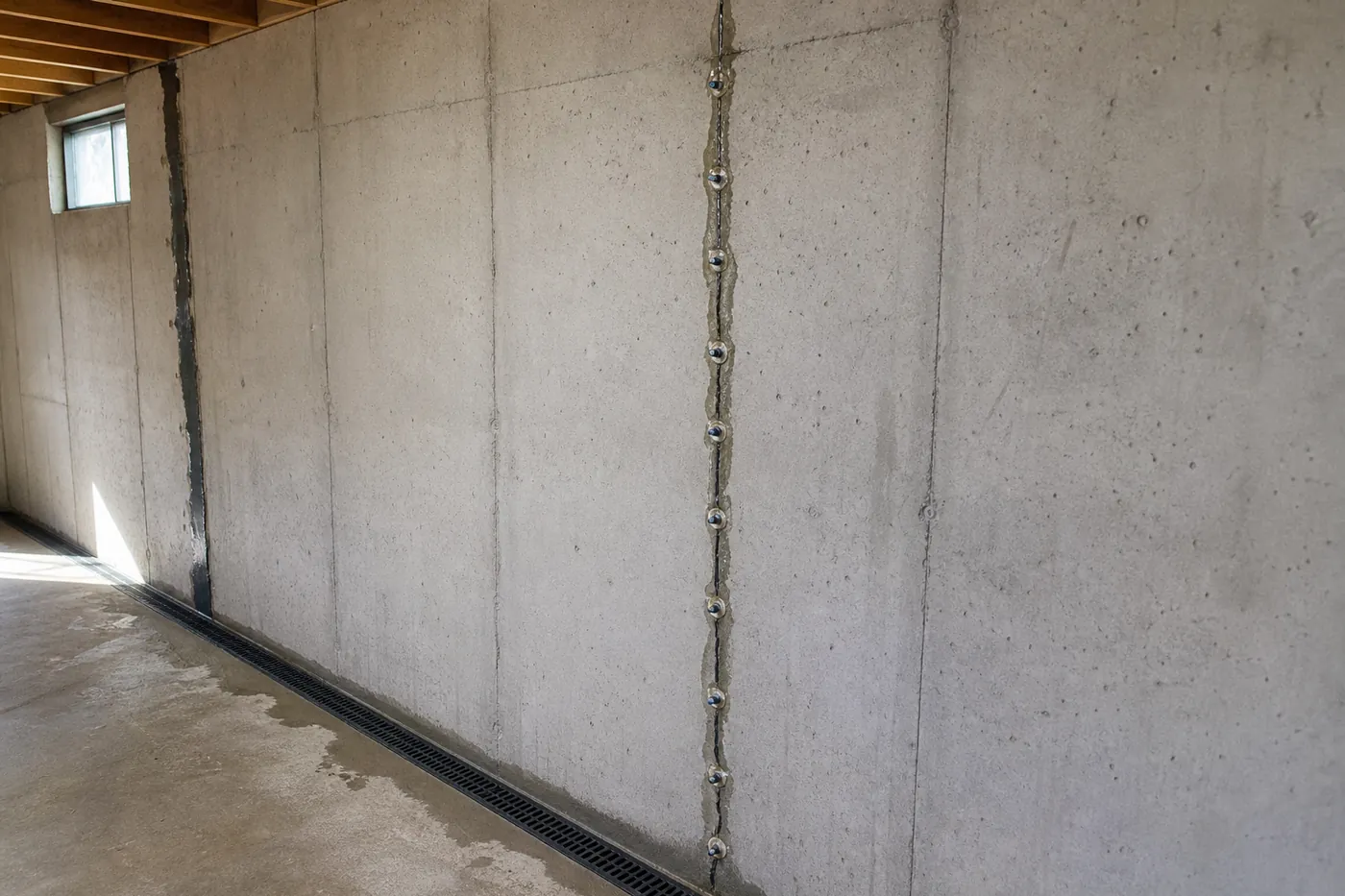
Why do Raleigh basements leak?
Only about 15% of North Carolina homes have a basement (U.S. Energy Information Administration, 2024), and the ground here is not especially kind to them. The USDA's Wake County soil survey rates about 43% of the county's rated land very limited for houses with basements, most often because of a seasonally shallow saturated zone or slope. Add an average of 11.6 days a year with an inch of rain or more (NOAA normals, Raleigh-Durham International Airport) and tropical storms such as Debby and Helene in 2024, and water finds the low points.
Where to look first
- The joint where wall meets floor, the most common entry when soil outside is saturated.
- Cracks in poured walls and open mortar joints in block.
- Window wells that fill and drain against the glass.
- The top of the wall, where a stoop, patio or flower bed slopes back toward the house.
- Pipe and wire openings through the wall.
Not every damp wall is a leak. Tape a square of foil to the wall for a day or two: moisture on the room side is condensation from humid air, while moisture behind it is coming through the wall.
Which basement waterproofing fix fits?
Start outside: clear gutters, extend downspouts well away from the wall, and grade soil so it falls away from the house. Fixr lists gutters and downspouts at $3–$30 per linear foot.
If water still arrives, an interior perimeter drain is the usual answer: the floor is cut along the walls, perforated pipe is laid in gravel and the water runs to a sump. A single leaking crack in a poured wall can be injected instead. Exterior excavation with a membrane costs more but stops water on the soil side. Sealer paints help with dampness, not water under pressure. A wall that has cracked sideways or moved needs structural crack assessment before any of this.
Sump pumps, power and radon
Storms that bring the most water can also cut the power, so ask about a battery backup; Fixr's 2025 guide puts adding one to an existing pump at $150–$250. Make sure the discharge line ends where the ground slopes away, not where the water runs back to the wall.
Wake County is in Zone 2 on the EPA Map of Radon Zones, and the EPA advises testing every home whatever its zone. Sealing cracks and capping a sump changes how soil gas moves, so a test after the work is sensible. For each item's typical range, see the foundation and waterproofing price table.
Questions homeowners ask
Do I need a sump pump if the basement only gets damp?
Not always. Dampness without standing water often comes from humid air or soil moisture through the wall, which outside drainage and a dehumidifier can handle. A sump earns its place when water collects under or along the floor after heavy rain and has to be lifted out.
Sources
- U.S. Energy Information Administration, Residential Energy Consumption Survey 2024: structural characteristics by state
- USDA NRCS Web Soil Survey (Wake County, North Carolina)
- NOAA NCEI 1991-2020 Climate Normals, Raleigh-Durham International Airport
- FEMA OpenFEMA Disaster Declarations Summaries
- EPA Map of Radon Zones, North Carolina
What have you noticed around the house?
Pick the closest match and add a line about where it is and when it started. One independent foundation specialist who serves Raleigh will phone you to talk it through.